
Our Turn: Lawmakers are Raiding Parks (Again)

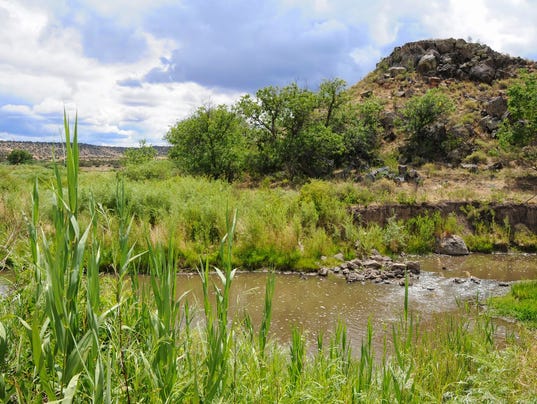
PNI 0712 hike wenima.jpg[Source: Arizona Republic,  February 29, 2016] –Wildlife’s political life seems to have come full circle since 1990 when by a 2-to-1 margin Arizona’s voters gave us the Heritage Fund, $20 million from the Lottery to be spent solely for Arizona’s parks and wildlife.

Half of the money was given in public trust to the Arizona State Parks Board, to support and manage Arizona’s park system. This money was taken by the Legislature in 2010 for budget balancing.

SERIES: Arizonans love state parks, lawmakers don’t

The other half of this money was given by the people to the Arizona Game and Fish Commission, again in public trust, to administer on behalf of Arizona’s wildlife. Twenty-four percent of this money was dedicated exclusively for acquisition of habitat for the benefit and conservation of sensitive wildlife species. Over the past 25 years, Game and Fish commissioners battled hard to protect those funds, especially the Acquisition Fund.

All past commissions believed that these funds — they amount to about $2.4 million a year — needed to be protected at all cost. After all, this fund was one of the crown jewels of the Heritage Voter Initiative. In the state parks half, there was $1.8 million available for such wonders as Kartchner Caverns, the San Rafael Ranch and the Sonoita Creek Natural Area. Such purchases are no longer possible following the legislative sweep.

RELATED: Parks experiencing record visitors

The acquisitions of Sipes White Mountain Ranch, White Water Draw, Wenima and other similar properties resulted from careful spending of Game and Fish’s funds. Now, sadly, those funds are in serious jeopardy.

In this legislative session, the commission has proposed Senate Bill 1361, which would deplete the acquisition fund by up to 50 percent to pay for operations and maintenance of the 16 properties it has acquired. Yes, operations and maintenance are important when you buy property, but it takes a good, full public process — not a legislative sweep — to help solve that problem.

In 2014, the commission made a good start by appointing the Heritage Working Group to study and make recommendations for these solutions. This group studied for months. It made recommendations, lengthy ones, which are now either being misrepresented or ignored altogether.

Among other things, the group recommended that 5 percent of the acquisition fund could be moved (with more public input) to the greater part of the Heritage Fund where operations and maintenance are in statute already. That’s 5 percent, not 50 percent, and with more public process.

MORE: Top 10 state and national parks in Arizona

After all, this is not the commission’s money — it is the people’s money. The voters created this fund and directed the commission, as public trustees, to spend it in a specific manner.

Is this concept important anymore? It is now up to the people to speak up and stop this latest – the 40th, we think – raid of the Heritage Fund. If you value the Heritage Fund and its importance to Arizona’s wildlife, please make your voices heard as the bill, now in the Senate, moves through the Legislature.

Bill McLean, Beth Woodin, and Bob Hernbrode are former members of the Arizona Game and Fish Commission. Woodin is the president of the Board of the Arizona Heritage Alliance, and Hernbrode is vice president of the Tucson Audubon Board and a biologist. (Photo: Mare Czinar/Special for The Republic)

Arizona Game & Fish Heritage Fund O&M Resolution Workgroup Meeting Summary, 08/06/14

nazsr_landscapephoto_600webArizona Game & Fish Heritage Fund O&M Resolution Workgroup Meeting Summary, 08/06/14

Attendees: Bob Vahle, Bill McLean, Josh Avey, Beth Woodin, Allen Taylor, Jim Unmacht, Jim deVos, Jim Hinkle, Jorge Canaca, Pat Barber, and Marianne Cox. Not attending: Bob Hernbrode Location: AGFD Headquarters

Meeting Summary:

  • Review of agenda, identification of additional agenda items including:
    • Addition of crowd funding to agenda for discussion
    • Clarification of the agenda: ‘discuss mechanisms/ability/guidance for Commission to consider regarding removal of non-historical structures properties that…’
    • June 16 meeting summary correction to incorporate suggestion to seek repayment of Heritage Fund funds previously swept by legislature to the list of approaches considered.
  • Group reviewed summary of Fiscal Year 13, 14, and 15 costing (budgeted and expenditure) as well as anticipated deferred maintenance costing for Heritage Fund acquired properties.
  • Discussion and agreement amongst group to allow recommend changing recommended modification to 17-298 whereby the Heritage Fund acquisition portion of the fund would change from 40% to 35% to allow for funding Heritage Fund acquired property operation and maintenance costing from the non-acquisition portion of the fund.
  • Discussed recommending amendment of Commission Policy to require annual Commission approval for use of Heritage Fund grant funds towards Heritage Fund acquired property operation and maintenance costing.
  • Discussed the need to utilize an open comment process to identify support for the recommendation to reduce the Heritage Fund acquisition portion from 40% to 35%; it was noted that this work group was established with membership intended to represent stakeholders on this issue and that the expectation is that work group membership should be providing information regarding recommendations to the Commission, expressing positions to the work group and serving as liaisons and conduits of information in support of public process and transparency.
  • Discussed approach and recommended modification to 17-298 such that acquisition may include fee simple title, or any possessory or non-possessory interest in land.
  • Disposal of property that does not carry the Heritage Fund value is already possible albeit cumbersome.
  • Structure removal on existing or future properties was discussed as a suitable recommendation.
  • Recommendation to minimize acquisitions that have structures that would have regular operation and maintenance costs.
  • Discussed approaches and feasibility for use of endowments (long term) and crowd funding and corporate sponsorship approaches in building a privately held endowment fund.

A suite of options to present to the Commission at the September Commission meeting was developed that entail: 1) long term funding generation/savings (solutions), 2) Short term funding generation/solutions, and 3) Legislative changes. See list of options below.

Work group reviewed the objective and tenets put forth by the Commission and determined that they met those objectives to the extent possible. No further meetings are needed.

Action Items:

  • Send list of recommendations for Commission consideration – Marianne Cox
  • Present options developed by workgroup to Commission for consideration at September Commission meeting – Jim deVos

Adjourn


Arizona Game & Fish Heritage Fund O&M Resolution Workgroup Recommendations List for Commission Consideration, August 6, 2014

Long Term Funding Generation/Savings (solutions)

  • Endowment – held by 501(c)3
  • Divest of non-sensitive species value properties (those portions that no longer meet intent of purchase)
  • Remove non-value-added (non-historic) structures from properties
  • Investigate the economic potential of new programs such as a wildlife watching Heritage Fund stamp
  • Modify Heritage Fund language to change acquisition fund percent from 40 – 35% so 5% ends up in IIPAM from where O&M expenditures can be made
  • Modify Heritage Fund language to allow for acquisition via non-possessory language and the divestiture of these properties using same
  • Seek corporate sponsors
  • Develop an O&M assessment with each new property being considered for purchase

Short Term Funding Generation/Solutions:

  • Minimize acquisitions that have structures that need O&M
  • Crowd funding for specific O&M actions
  • Seek legislative refunding of funding swept by prior legislature in 2003 – $10 million from Heritage Fund acquisitions fund

Legislative Changes:

  • Change percentage in Heritage Fund Acquisition fund from 40% to 35% so extra 5% ends up in IIPAM from where O&M expenditures can be made
  • Allow for non-possessory acquisition such as conservation easement and disposal of property or portions of properties by “conservation buyer” under a conservation easement

Hands off the Heritage Fund, lawmakers

[Source: Arizona Republic Editorial Board] – Lawmakers, show some respect for voters.

In 1990, Arizonans overwhelmingly approved the Heritage Fund, directing $10 million a year in Lottery revenue each to the Arizona Game and Fish Department and the Parks Department. This reflected a deep commitment to some of Arizona’s greatest resources: a rich history, diverse wildlife and dazzling natural landscapes.

The Legislature took the state parks’ share during the recession, and has unwisely rejected a number of efforts to restore that funding.

Now some of the Game and Fish share is at risk.

A portion of Game and Fish Heritage money is supposed to be spent on acquisition of land as habitat for threatened and endangered species. A strike-everything amendment to a House-passed bill would allow it to be used for operation and maintenance.

This goes against the “heart and soul” of what voters intended when they passed the Heritage initiative, says Beth Woodin, member of the Arizona Heritage Alliance and former Game and Fish commissioner.

What’s more, it’s sneaky.

This is a stealth effort to do something the public probably would not approve.

To that point, the altered bill was held in a Senate committee last week after it began to attract attention and opposition. It should disappear entirely.

If the Game and Fish department needs more money, let it ask for the funding. Then invite the Heritage Alliance and others who respect the spirit of this voter-approved law to be part of a discussion about what changes make sense.

Game and Fish offers additional Heritage Grants award opportunity

[Source: Yuma News Now] – The Arizona Game and Fish Department announced the availability of additional Heritage Grant awards in two categories for the 2014 grant cycle. Grant proposals will be accepted until Friday, March 14 at 5 p.m. MST in the environmental education and outdoor education categories.

Applicants should review the revised Heritage Grant eligibility funding windows (eligibility criteria) and application forms at www.azgfd.gov/w_c/heritage_apply.shtml to obtain specific guidance for goals and objectives listed within each grant category.

The grants are supported by revenue from Arizona Lottery sales and are available to projects that focus on wildlife. In the last grant cycle. Game and Fish used Heritage funds to award more than $415,000 to 32 grant projects across Arizona. When combined with matching money from other sources, the projects being funded total nearly $1 million invested in Arizona.

Started in 1990, the Heritage Fund was established by Arizona voters to further conservation efforts in the state, including protecting endangered species, educating our children about wildlife, helping urban residents to better coexist with wildlife, and creating new opportunities for outdoor recreation. Over the years, Game and Fish has awarded more than $13 million in grants to communities across the state. Arizonans can help raise money for the Heritage Fund every year simply by buying Arizona Lottery tickets.

Application proposals can be submitted either electronically to rbeck@azgfd.gov or mailed directly to Arizona Game and Fish Department, ATTN: Wildlife Grant Administrator, 5000 W. Carefree Highway,  Phoenix, AZ 85086. No faxed applications will be accepted.

More information on the grants and application forms can be found at www.azgfd.gov/w_c/heritage_apply.shtml or contact Robyn Beck at rbeck@azgfd.gov. For more information on the Heritage Fund, visit www.azgfd.gov/heritage.