Reflecting on the Women of Arizona State Parks, Preservation, and Public Lands

Arizona State Parks & Trails, March 23, 2026

Women’s History Month, we look back not just to honor the past, but to recognize how the strength, vision, and dedication of countless women have fundamentally shaped Arizona State Parks and Trails. From the highest leadership positions to the hands-on work of conservation and historic preservation, women have made a profound and positive impact on our state’s outdoor recreation, natural resources, and shared history. Our agency, and the beautiful and historic places we protect, are undeniably better today because of their trailblazing contributions.

Milestone Makers and Agency Pioneers

Women who broke barriers and built the foundation for the modern Arizona State Parks system.

  • In 1957, Frances Weedon was the sole woman appointed to the first-ever Arizona State Parks Board of Directors, lending a crucial voice to the agency’s earliest days. Her contributions paved the way for Josephine Bailey, who would chair the board in 1979.
  • The tradition of female leadership in the parks themselves was set by Clarissa Winsor, the curator who became one of the first park managers when she opened the doors to Yuma Territorial Prison State Historic Park in 1961. This paved the way for women like Karen Berggren, the first park manager of Homolovi State Park when it opened to the public in 1993.
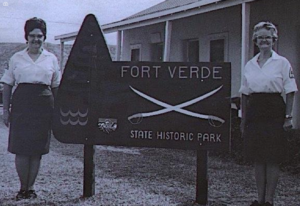
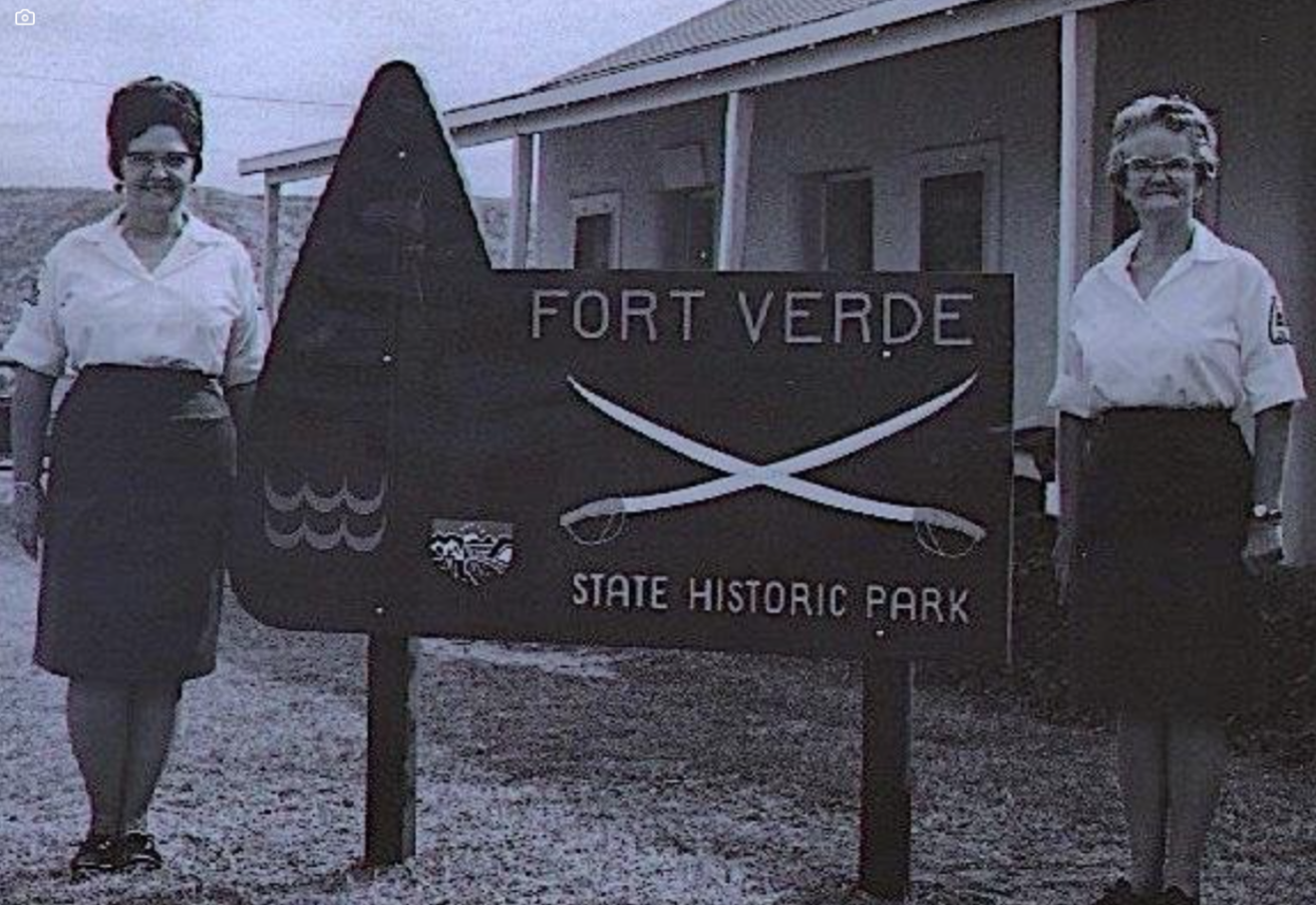
  • In the early days of the outdoor recreation industry, few women worked among the park ranger ranks. At Arizona State Parks and Trails, Lucille German achieved a major milestone in 1970 as the first female park ranger in the entire state park agency, hired at Fort Verde State Historic Park.
  • Dark days were those of the Great Recession, but Renee Bahl served as the first female director of Arizona State Parks and Trails in 2009. She expertly navigated the agency through a tumultuous time of recession, securing agreements with partners to keep parks open and ensuring the agency’s future stability. Today, that legacy of leadership continues with women like Sarah Webber, our current deputy director.
Conserving Arizona’s Unique Treasures

Ensuring that both our historic structures and natural landscapes would endure for generations.

  • Elisabeth Ruffner was a powerhouse of preservation, co-founding the Arizona Preservation Foundation in 1979, a nonprofit that works closely with the Arizona State Historic Preservation Office (SHPO) today. Her work helped secure listings for over 700 historic buildings on the National Register of Historic Places — a function SHPO serves today to recognize the physical places that hold the stories of our state. Similarly, Edna Landin championed the preservation of the Tombstone Courthouse, advocating for preservation ordinances and led fundraising for the restoration of what is today Tombstone Courthouse State Historic Park. Both women are Arizona Women’s Hall of Fame Inductees.
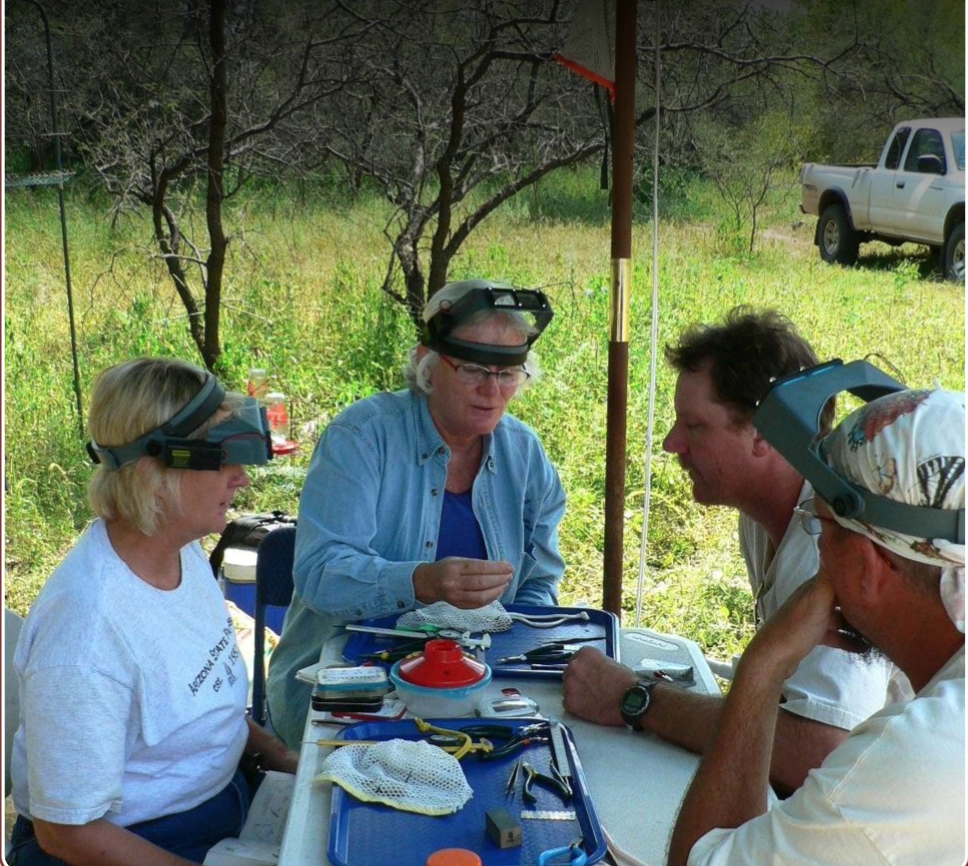
  • A shining example of women in STEM (Science, Technology, Engineering, and Mathematics), Joanne Roberts, resource ecologist and conservation biologist, directed the implementation of natural resource management plans across 30 of our state park properties as program manager and Ecologist from 2004-2009. Her work ensured a scientific approach to stewarding our state parks and natural areas. Today she serves as the president of the Friends of the San Pedro River.
  • We must also acknowledge the advocacy of individuals like Beverly Miller, Flagstaff resident who was married to longtime Arizona State Parks Board member Duane Miller. Her deep commitment to our state parks was the primary reason Riordan Mansion State Historic Park was donated to the State Parks Board.
Executive Champions for State Parks

These female governors directed actions of Arizona’s executive branch that turned dreams of parks and protected places into reality.

  • Governor Rose Mofford, the first woman to become governor in Arizona, signed the bills to acquire Kartchner Caverns in 1988 and Tonto Natural Bridge in 1990. These two state parks are some of our state’s most spectacular natural sites.
  • Governor Jane Hull presided over the grand opening of Kartchner Caverns in 1999, celebrating the long-lasting conservation efforts and enduring access to this geological wonder. Governor Janet Napolitano presided over the grand opening of the famous Big Room in 2003.
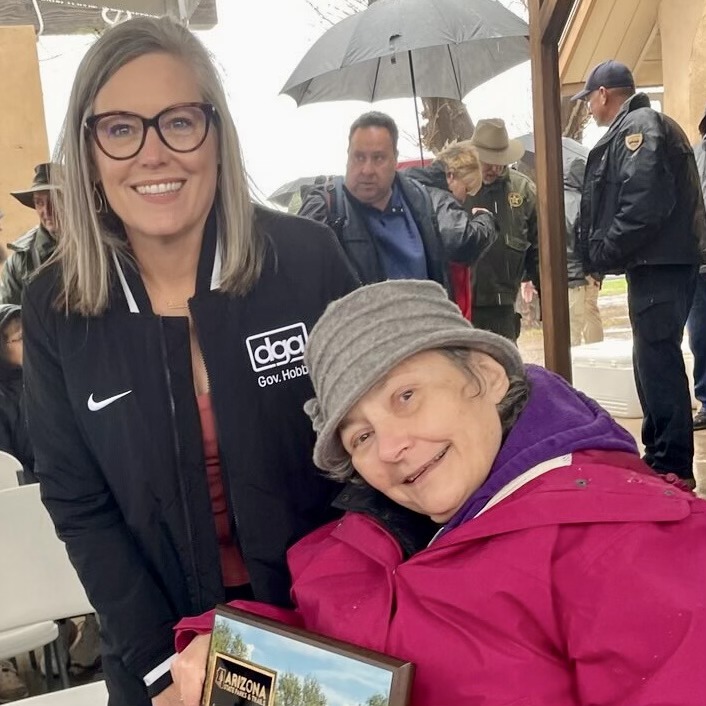
  • Governor Katie Hobbs held the dedication ceremony on February 8, 2024, to open Arizona’s newest state park, Rockin’ River Ranch in Camp Verde. During the ceremony, she recognized another woman influential in Arizona’s public lands, Janice Miano. Janice, the namesake of the Miano Trail at the park, is an environmental advocate, past president of the Arizona Audubon Council, and board member of the Arizona Heritage Alliance.
The impact of these women as leaders, park managers, preservationists, scientists, and advocates is woven into the very fabric of Arizona State Parks and Trails. Their work has created access to outdoor recreation, safeguarded irreplaceable historic sites and artifacts, and protected the natural beauty of our state. Thanks to their contributions, the legacy of Arizona’s lands endures for all who call this place home.
Arizona Heritage Alliance Applauds State Parks Board Approval of FY2025/2026 Heritage Fund Grants

The Arizona Heritage Alliance commends the Arizona State Parks & Trails Board for approving Fiscal Year 2026 Heritage Fund grants totaling $848,847 across three funding categories: Historic Preservation, Environmental Education, and Local, Regional, and State Parks (LRSP). The grants, reviewed and approved at the Arizona State Parks & Trails Board’s March 19 meeting in Phoenix, represent a broad and meaningful investment in protecting Arizona’s historic places, connecting residents — especially young people — with the natural world, and improving park infrastructure in communities across the state.

FY26 Heritage Fund Historic Preservation Grant Awards — $453,130

  • Naco Heritage Alliance — $60,000 for preservation and structural stabilization of Barracks A4 at Camp Naco, one of the best-preserved remaining Buffalo Soldier border posts in the country, constructed in 1919.
  • Arizona State Parks — $60,000 for repair of the historic fireplace, chimney, windows, doors, and adobe structure of the Kannally Ranch House at Oracle State Historic Park, preserving interior wall paintings and supporting continued public programming.
  • Arizona Historical Society — $60,000 for Phase 1 planning to preserve two surviving World War II prisoner-of-war structes from Camp Papago — a 1943 POW camp in Phoenix — with a long-term vision to create a museum exhibit at the Arizona Heritage Center in Tempe.
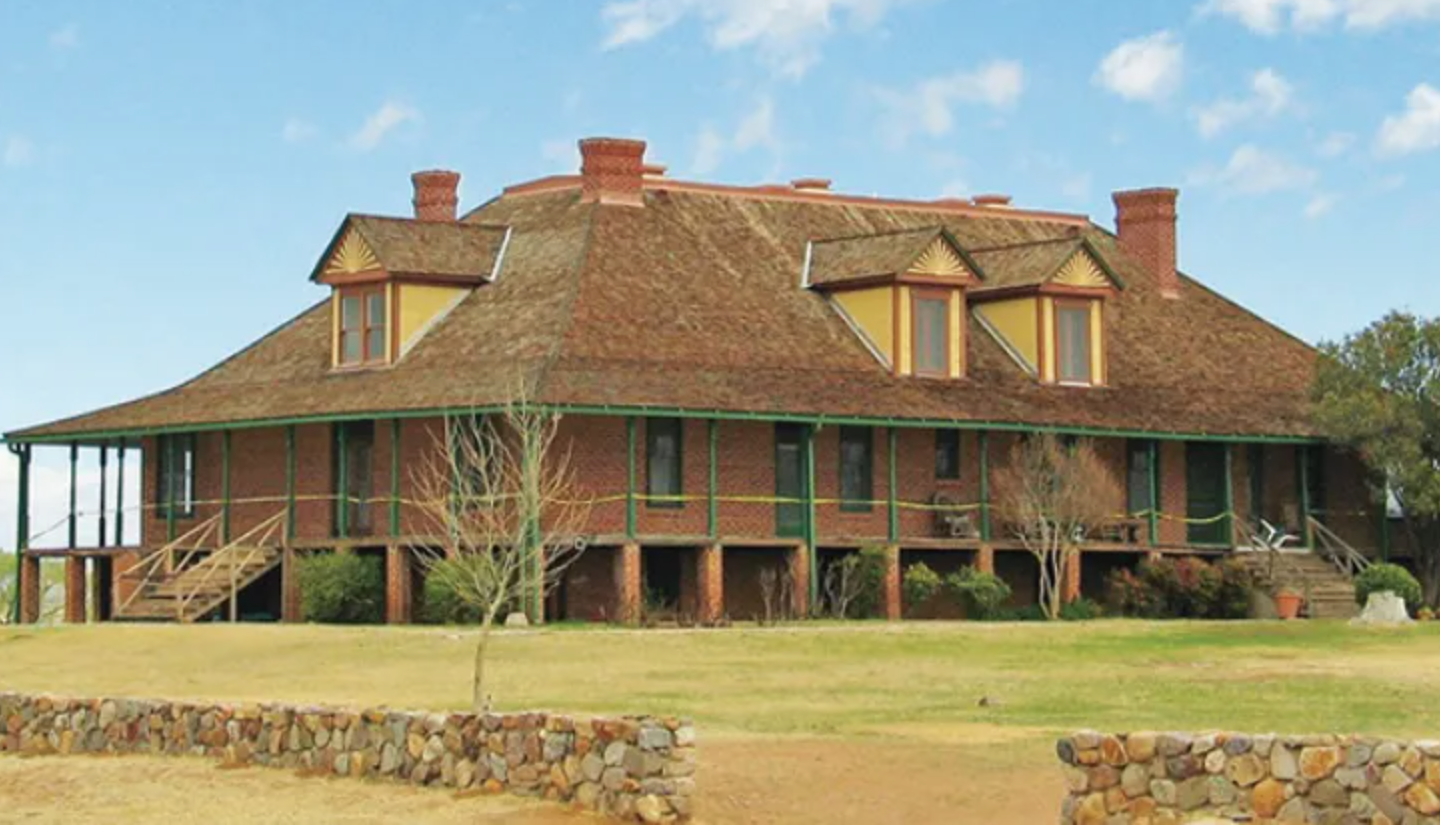
  • Friends of San Rafael State Natural Area — $43,640 for structural repairs to the historic San Rafael Ranch House, including the wrap-around veranda, dormer windows, and double-hung windows, with plaster repairs to address past water damage.
  • City of Tucson Planning & Development Services — $58,180 for Phase 1 of a historic resource survey of parks and recreation facilities across Tucson, establishing the historical context and analytical framework to guide future evaluation and designation efforts.
  • St. Philip’s in the Hills Episcopal Church Preservation and Endowment Foundation — $60,000 for Phase 2 stabilization of the mud adobe south facade wall of Saint Philip’s in the Hills Episcopal Church, which has separated from its framework and poses a structural risk.
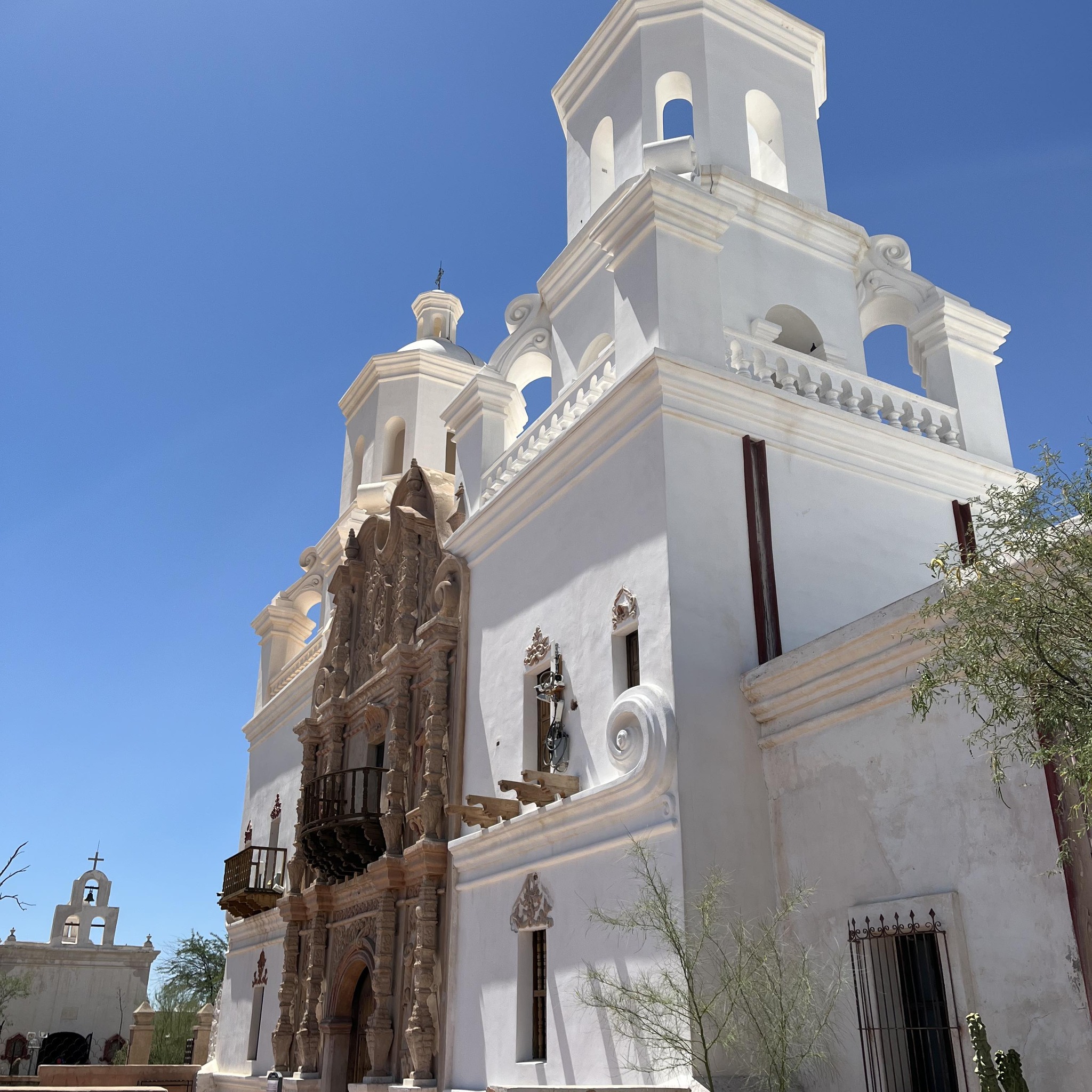
  • Patronato San Xavier — $60,000 for rehabilitation of the decorative retablo facade at the Mission San Xavier del Bac, including replacement of the central wooden balcony — a defining architectural feature last replaced in 1953 — at this active parish church serving the Wa:k O’odham community.
  • St. Michael’s School — $51,310 for rehabilitation of character-defining historic wood features on the west wing of the St. Michael and All Angels Episcopal Church and School campus in Tucson, supporting continued use as active classroom space.

FY26 Heritage Fund Local, Regional, and State Parks Grant Awards —$296,200

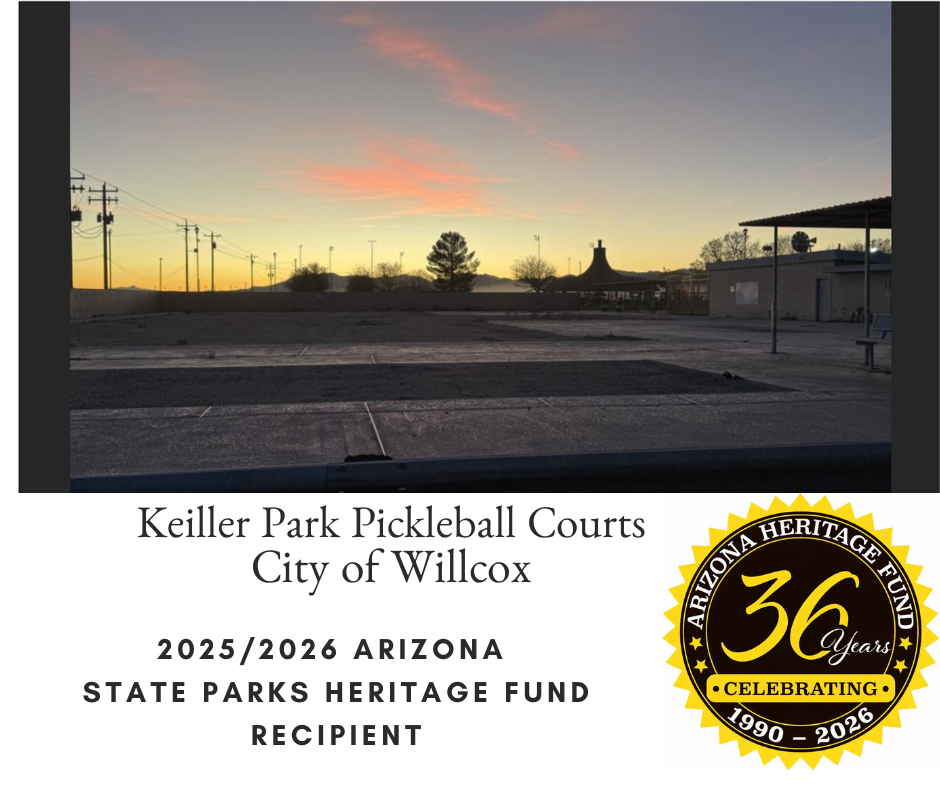
  • City of Willcox — $100,000 for construction of pickleball courts at Keiller Park, expanding recreational amenities for residents of Willcox and surrounding communities.
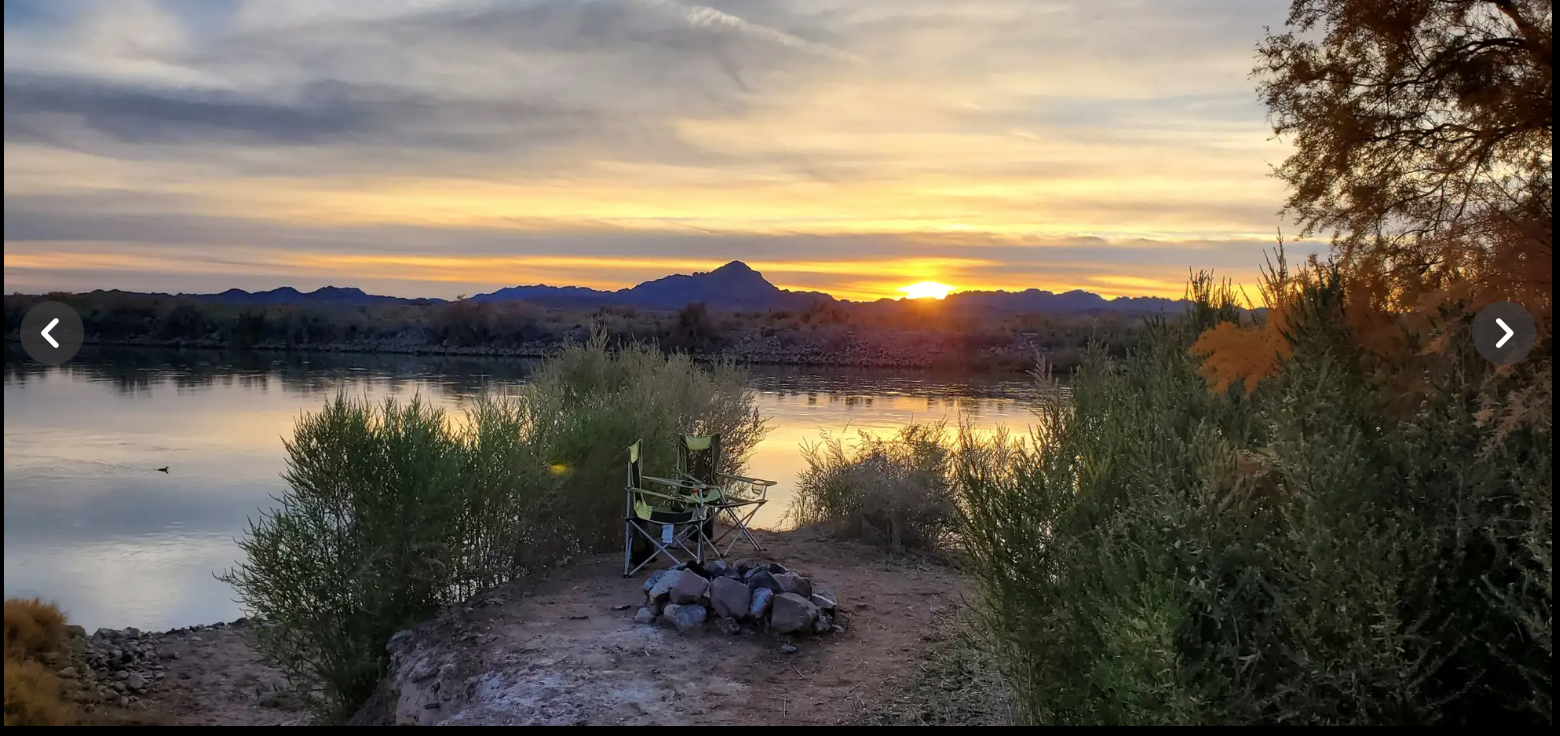
  • La Paz County — $96,200 for water system development at Hippie Hole, a popular recreational destination along the Colorado River, improving infrastructure and visitor access.
  • Dishchii’bikoh Community School — $100,000 for construction of a community baseball field, providing critical outdoor recreational space for the students and families of the White Mountain Apache community.


FY26 Heritage Fund Environmental Education Grant Awards — $99,517

  • Beyond Foundation — $20,000 to support Beyond Summer Mountain Bike Camps, connecting youth with Arizona’s outdoor environments through trail-based education and recreation.
  • EmpoweRanch — $20,000 for accessible and inclusive outdoor camps for youth with disabilities, based on the H.O.R.S.E.E. (Horsemanship, Outdoor Recreation, Service, Education, and Empowerment) format.
  • Advocates for Snake Preservation — $19,517 to develop a Snake Advocate Toolkit, expanding public education and appreciation for Arizona’s native snake species.
  • Grand Canyon Youth — $20,000 for an education and adventure program connecting Arizona youth with Arizona waterways, combining river-based learning with environmental stewardship.
  • Wheel Fun — $20,000 for the Empowering Tomorrow program, using cycling and outdoor recreation to engage youth in environmental education and community connection.

“These grants touch every corner of Arizona — from a frontier military post near the border to a community baseball field on the White Mountain Apache homeland to a working mission church in Tucson that has served its community for more than two centuries,” said Jim McPherson, Board Chair of the Arizona Heritage Alliance. “This is exactly what the Heritage Fund was designed to do: invest in the places, programs, and people that make Arizona extraordinary. The Arizona Heritage Alliance is deeply grateful to Governor Katie Hobbs and the Arizona State Legislature for approving the funding that makes this grant cycle possible. Their commitment to Arizona’s historic, cultural, and natural resources is felt today in every community represented in these awards. We renew our call on the Legislature to go further and fully restore the Heritage Fund so that every worthy project has a fighting chance. The voters who created this Fund deserve nothing less.”

“Arizona State Parks and Trails is proud to administer these Heritage Fund grants on behalf of Arizona’s communities,” said Bob Broscheid, Executive Director of Arizona State Parks and Trails. “Today’s awards span historic preservation, youth environmental education, and local park improvements — reflecting the full scope of what the Heritage Fund was built to accomplish. From stabilizing a 100-year-old adobe barracks to funding summer camps that inspire the next generation of outdoor stewards, these investments will be felt in Arizona communities for decades to come. We thank Governor Hobbs and the Legislature for their support of this funding, and we look forward to seeing these projects come to life across the state.”

“What strikes me most about this grant cycle is the breadth of communities we are able to serve,” said John Sefton, Board Chair of the Arizona State Parks Board. “Whether it is a small town in Cochise County, a tribal community school in the White Mountains, or a nationally significant mission church in Tucson, the Heritage Fund has the reach to make a difference everywhere in Arizona. I am proud of the work this Board does to ensure these dollars are directed to the projects that need them most, and I am grateful to the many organizations and communities who put their faith in this process.”


About the Arizona Heritage Alliance Formed in 1992, the Arizona Heritage Alliance is a bipartisan, non-profit 501(c)(3) organization funded solely through private donations, grants, and memberships. The Alliance’s mission is to protect, preserve, and enhance Arizona’s historic, cultural, and natural heritage. The Alliance actively monitors legislative and agency activity, advocates for sustainable and dedicated funding for Arizona’s historic and cultural initiatives, and educates Arizonans about the benefits of the state’s wildlife, open spaces, parks, and historic resources. For more information, visit azheritage.org


2026 New Year Update from the AZ Heritage Alliance

Dear Arizona Heritage Alliance Members, Partners, and Friends, 
 
Because of the sustained efforts of thousands of community allies and bipartisan legislative champions, the Arizona State Parks Heritage Fund was restored to statute in 2019. Since that time, $25.7 million has been allocated – including $1 million approved by the Legislature and Governor for FY 2026–2027 – to support projects that benefit communities across Arizona: 
  • 50% – Local, regional, and state parks
  • 30% – Historic preservation
  • 10% – Non-motorized trails
  • 10% – Outdoor and environmental education 
These investments – together with the original projects funded between 1992 and 2008 – have left an enduring legacy, strengthening Arizona’s outdoor spaces, historic places, and cultural resources. Detailed project descriptions, photographs, and an interactive map are available on our website at https://azheritage.org
 
Planning Ahead: Advocacy and Legislative Strategy 
As we look toward the next budget cycle and beyond, the Arizona Heritage Alliance remains fully committed to protecting and strengthening the Heritage Fund. Our Legislative Task Force, chaired by Board Vice President Russ Jones, is actively developing a comprehensive legislative game plan to benefit both the State Parks Heritage Fund and the Game and Fish Heritage Fund. 
 
This work is especially urgent. A significant backlog of deferred maintenance and repair still exists across Arizona’s parks, historic sites, and cultural resources – much of it stemming from the Great Recession, when the State Parks Heritage Fund was removed from statute and its revenues swept into the General Fund. At the same time, the need for housing that can be created through the adaptive reuse of historic buildings and districts – across communities large and small – has never been greater. Thoughtful rehabilitation can help meet housing needs while preserving community character. 
 
Recent flooding in historic downtowns such as Globe and Miami further underscores the vulnerability of these places and the importance of reinvestment. Strategic use of Heritage Fund resources can not only stabilize and restore historic and cultural assets, but also serve as a catalyst for economic development, downtown revitalization, and heritage tourism – outcomes that benefit entire regions. 
 
Looking Toward 2026: A Once-in-a-Generation Moment 
Our advocacy takes on added significance as we approach several major milestones in 2026, including the 100th anniversary of Route 66 and the 250th anniversary of the signing of the Declaration of Independence. Arizona will play a prominent role in commemorating these events through statewide observances that highlight our unique history, landscapes, and communities. Ensuring that our parks, historic sites, and cultural institutions are ready to meet this moment is both a responsibility and an opportunity. Details here: https://www.america250az.org
 
Grant Opportunities: Now Open 
Applications are now being accepted for the FY 2026 State Parks Heritage Fund. We encourage eligible organizations and communities to apply and to share this opportunity broadly. Comprehensive information about all available Arizona State Parks grant programs can be found here: https://drive.google.com/file/d/1_AfkJTyV22zRPGLdtOuGv7ecKwGsYtp_/view 
 
Program Spotlight: Arizona Game and Fish Heritage Fund 
The Game and Fish Heritage Fund continues to deliver remarkable conservation outcomes, supporting more than 800 wildlife species statewide. One standout initiative is Focus Wild Arizona, an award-winning wildlife education program offering: 
  • Free lesson plans, books, posters, and online resources
  • Professional development workshops for educators
  • Standards-based curriculum aligned with science, social studies, math, and language arts
  • Grants of up to $3,000 for wildlife education projects and student field trips 
These resources are available at little or no cost, helping educators bring Arizona’s natural heritage directly into the classroom. Details here: https://www.azgfd.com/education/focus-wild-2/
 
Gratitude for Our Board and Partners 
We extend our sincere appreciation to the Arizona Heritage Alliance Board of Directors for their leadership, dedication, and continued support of the many organizations and initiatives that strengthen communities throughout Arizona. Their commitment makes our collective work possible. 
 
A Critical Moment: How You Can Help 
Our progress has always been driven by strong partnerships – with elected officials of both Support the Arizona State parks Heritage Fund banner parties, community organizations, and engaged citizens across the state. Yet ongoing state budget pressures make the coming year particularly challenging. 
 
We must continue working together to secure funding for FY 2026 and to advance the long-term goal of restoring the original Arizona Lottery funding formula for the State Parks Heritage Fund. Your involvement – through membership, contributions, and advocacy – remains essential. 
 
Contribute Today 
Online: azheritage.org 
By mail: Arizona Heritage Alliance, P.O. Box 16282, Phoenix, AZ 85011 
 
Start the New Year in Arizona’s State Parks 
As a special way to kick off 2026, we invite you to take part in a Free First Day Hike at Arizona’s State Parks. Arizona State Parks and Trails is offering all First Day Hikes with no entry fee in celebration of America’s 250th anniversary. It’s a great way to begin the year outdoors and reconnect with the landscapes and places that make Arizona unique. Details here: https://azstateparks.com/first-day-hikes
 
Together, we can ensure that Arizona’s natural, cultural, and historic resources are protected, celebrated, and preserved for generations to come. 
 
With gratitude, 
 
Jim McPherson, Board President 
Russ Jones, Board Vice President & Chair, Legislative Task Force 
Arizona Heritage Alliance

Future of AZ trail projects unknown as Congress claws back funding

KAWC/by Arizona News Connection – September 10, 2025 – by Kathryn Clarley

Community advocates in Arizona say the loss of federal funding for alternative transportation projects is a major setback for revitalizing and connecting neighborhoods throughout the state.

Congressional lawmakers have repealed roughly $750 million in previously allocated funds for trails and pedestrian pathways nationwide, leaving many projects in limbo.

R.J. Cardin is executive director of the Maricopa County Trail and Park Foundation. He said federal dollars often spur state and local investments to further improve residents’ quality of life.

“It’s very critical that communities look at the federal government as a partner in this,” said Cardin, “and have some stability to continue to plan and to continue to move forward with projects.”

He said connected trail networks help drive tourism, reduce road congestion and ensure kids can safely walk or bike to school. Lawmakers say the cuts were needed to trim federal spending and extend the 2017 tax cuts.

Arizona is one of the country’s fastest growing states. It also has a higher-than-average share of older adults.

Studies show reliably maintained and connected trails help ensure residents’ stay active and engaged in their communities. Cardin said they also provide the recreation and transportation options young people are looking for when deciding where to live.

“Having quality-of-life amenities will help attract young workers to communities,” said Cardin. “So, I think it’s vital that we have not only good trail networks but good parks and open space opportunities as well.”

He noted that 1-in-3 people in Arizona typically don’t drive every day and are looking for safe alternatives, while some people rely on well-maintained walking and biking trails to get around.

He said it’s important that people who value trails let lawmakers know why they’re important and how federal dollars can help improve their community’s future growth.

A 2020 University of Arizona study found the economic value of state trails was more than $8 billion, highlighting the important role they play in Arizona’s overall economy.