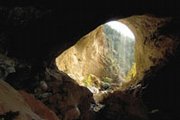
Sustainable State Parks Task Force renewed by Arizona Gov. Brewer

[Source: Office of the Governor] — Governor Jan Brewer recently signed an executive order to reestablish the Governor’s Sustainable State Parks Task Force, which will begin work immediately.  “It is essential that we find a sustainable solution for our State Parks system,” said Governor Brewer. “State Parks are important to Arizona’s economy and numerous local communities, as they attract millions of visitors and preserve important cultural and natural resources.  Now more than ever we need to reexamine the condition of the state park system and find creative ways for our beautiful parks to endure.”

The Sustainable State Parks Task Force was originally created in 2008 by executive order, but no progress to date has been made. In an effort to work through recent budget reductions and possible closures of various parks, Governor Brewer has re-assembled a group of leaders from across the state to examine and provide recommendations for the future of Arizona State Parks. The charge given the Task Force is the same as in 2008, to assess the condition of the State Parks system and its impacts on Arizona’s overall economy.  Ultimately the group will make recommendations to the Governor as to how the system can achieve financial sustainability into the future.

Rich Dozer, president of GenSpring, a Phoenix Investment Company, and former president of the Arizona Diamondbacks will chair the Task Force.  He will be joined by William Roe, Glen Kerslake and Diana Freshwater of Tucson; Robert McLendon of Yuma; Grady Gammage, Jr. of Tempe; Bill Cordasco of Flagstaff; and Walter Meek, Harry Papp, and Jeffery Williamson of Phoenix. The Task Force may grow its membership to no more than 21, and all members will serve without compensation.  The deadline for their recommendations is October 31, 2009.

“These places, such as Kartchner Caverns, Tonto National Bridge, and Tombstone, are all cultural and recreational jewels of Arizona,” said incoming chairman Dozer.  “In this economy, it is a great challenge to find a sustainable method to fund their protection and enhancement.”  [Note: For more information, contact Paul Senseman at 602-542-1342.]

Viewpoint: Closing Riordan Mansion State Historic Park would hurt Flagstaff

[Source: Gwen Groth, Arizona Daily Sun “Letter to the Editor”] — Riordan Mansion State Historic Park remains at risk of closing due to Arizona’s grave budget crisis.  Funds have already been swept from Arizona State Parks and more will be requested.  Shuttering Riordan Mansion State Historic Park goes much further than closing a nice picnic area with a pretty house as a backdrop.  Three part-time employees have already lost their jobs at Riordan Mansion and if the park closes, four full-time employees will lose their jobs as well.  Flagstaff stands to lose nearly 30,000 visitors annually who pause to have lunch, stay in a hotel and visit other attractions.

The “mansion” does not tell the story of a wealthy family.  Instead, the energy-efficient home tells the story of Flagstaff’s beginning and one family who worked hard to build a business and a community.  The Riordans were instrumental in the development of Flagstaff’s infrastructure, education and environmental preservation.  The family donated their home to Arizona so that the legacy of giving could continue through the education of visitors for decades to come.

The state park offers more than a guided tour, museum and beautiful grounds.  Area schools use Riordan Mansion as a hands-on (and affordable) means to teach students about our history.  The park also holds lectures twice monthly that are free, informative and open to the public.  Budget cuts are painful, especially where education is concerned.  Though closing Riordan is not a direct hit to our education system, it is an indirect strike that will hurt Flagstaff in many ways.

Arizona: State Park Schließungen erwogen

Arizona's park woes covered in Germany.

{Frank Hennemann, Abgelegt unter Newsticker des Südwestens] — Wegen Kürzungen beim Budget des Bundesstaates Arizona werden Schließungen von mehreren State Parks in Betracht gezogen.  Die Arizona State Park Direktion hielt darüber ein öffentliches Meeting am Freitag, den 20.  Februar 2009 im Ratssaal des Peoria Stadtrates ab. Bei diesem Meeting versuchte die Park Direktion, bestehend aus sieben Freiwilligen, Optionen zur Begrenzung des per 30.  Juni 2009 zu erwartenden Defizites zu finden.

Einige Möglichkeiten, um die Verluste einzelner State Parks zu begrenzen, sind Kürzungen von Zuschüssen, Schließungen ausgewählter Parks, saisonale Schließungen, begrenzte Öffnungszeiten, Kürzungen bei den Versorgungsausgaben, Kündigungen oder der Transfer von Ausgaben auf andere Budgetpositionen. [Note: To read the full post, yes in German, click here.]

Rim Country legislators vow to reopen Tonto state park

Jack A. Brown
State Rep. Jack Brown

[Source: Pete Aleshire, Payson Roundup] — The closure of Tonto Natural Bridge State Park this week provoked a flurry of public outrage, angry volunteers, muddled explanations, contentious meetings, collapsing budgets and blame-shifting lawmakers.  By the time the rhetorical smoke had cleared, all three of the Rim Country’s legislative representatives had sworn to push for the reopening of the park as soon as possible. However, they largely sidestepping blame for the draconian budget cuts that forced the state parks board to plan closure of more than half of its 27 parks — including the Rim Country park showcasing the world’s largest travertine arch.

Sylvia Allen
State Senator Sylvia Allen

The action this week took place first at an overflow public meeting in Payson on Tuesday attended by representatives Jack Brown and Bill Konopnicki, followed by a vigorous arm-twisting session in the Phoenix office of Sen. Sylvia Allen on Wednesday.  The state parks board had unexpectedly closed Tonto Natural Bridge to shift staff to other parks while contractors do roof and structural repairs on an historic building that’s been leaking badly for so long that it has suffered structural damage. The three state lawmakers vowed to get the park open before summer either by pressuring the parks board to fence off the crumbling lodge during the $600,000 construction project or by postponing repairs.  They each denounced the parks board’s decision as “political,” but none directly addressed the impact of the legislature’s decision to take $34 million from various parks’ funds — nearly $30 million more than the general fund contributes to park operations.

Bill Konopnicki
State Rep. Bill Konopnicki

Instead, the lawmakers criticized the parks board for “playing politics” by closing a popular, nearly self-supporting park like Tonto Natural Bridge, which draws about 90,000 visitors annually and contributes an estimated $3.5 million to the local economy.  “We have to get this park opened back up,” said Rep. Konopnicki (R-Safford) at the town meeting held at the Best Western Payson Inn, which drew an overflow crowd of 150. “I just can’t understand what the parks board was thinking … It’s politically motivated to make people yell at the legislature,” he said. [Note: To read the full article, click here.]